PR Week – Winning the Conversation Before Breaking Ground on Data Centers
Driven by AI demand, data center developers are facing local opposition from citizens who
want to know what they mean for their communities. Developers must prioritize early
community engagement and public trust, says Mach 1 Group’s Katherine McLane.
Despite all the political and cultural changes the U.S. has experienced in recent years, one truth remains constant: When public opinion reaches critical mass, government has little choice but to respond.
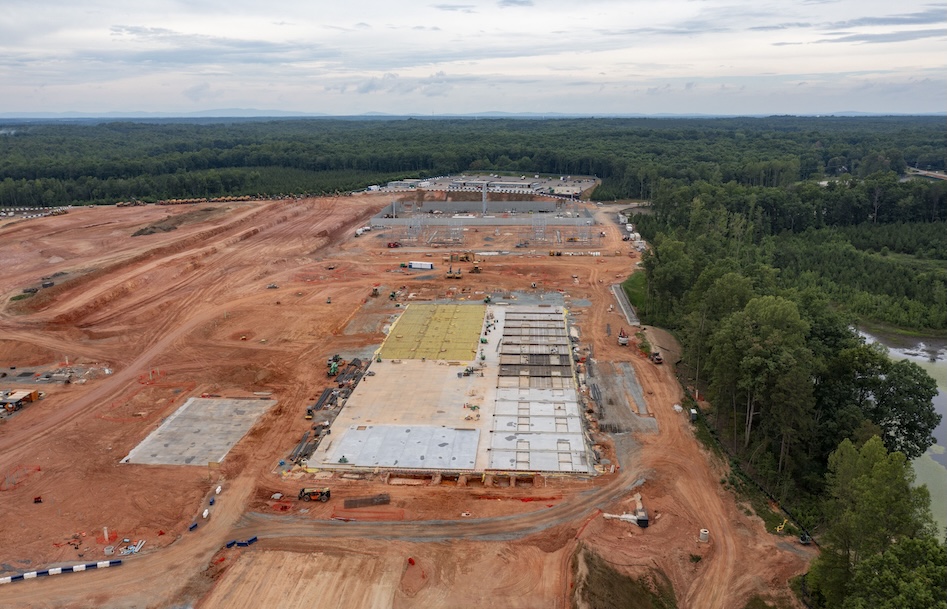
We’re watching that play out with data centers. Demand for AI, cloud computing and digital infrastructure is driving an unprecedented wave of data center development. New facilities are being proposed across the country, and industry analysts expect demand for additional capacity to continue growing throughout the decade.
As construction accelerates, so does public scrutiny. Across the country, familiar concerns are emerging at the local level: water consumption, tax incentives, infrastructure demands and energy use. Virginia experienced this first. Texas, now the nation’s leading data center market, is following a similar path. Texas Governor Greg Abbott recently delivered a blunt message to the industry: Bring your own power and reuse your water.
The lessons from Virginia and Texas are clear: Buying land and securing permits is no longer enough.
From an industry perspective, data centers represent investment, high-paying jobs, tax revenue and America’s leadership in the digital economy. At the local level, however, residents are asking a much simpler question: What will this mean for my community?
One country. Fifty states. More than 3,000 counties
No two communities evaluate projects the same way. In rural communities, where agriculture and groundwater are central to the local economy, concerns often center on water use, land impacts and long-term resource availability. Messaging built around innovation or national competitiveness may miss the issues residents care about most.
In fast-growing metropolitan areas, the conversation is more likely to focus on grid reliability, transmission capacity, traffic congestion and how additional industrial development fits within
broader growth plans.
The communications challenge facing the industry is becoming increasingly local. The traditional development model — buy land, file permits and break ground — can leave communities feeling surprised, excluded or forced to react after major decisions have already been made. When that happens, organized opposition becomes far more likely, placing projects, timelines and investments at risk.
The new reality
Many communities are being asked to evaluate complex infrastructure projects before residents fully understand what data centers are, how they operate or what impacts they may have locally. Without meaningful engagement, misinformation often fills the void.
Successful developers are beginning to take a different approach:Engage communities early,
before permitting discussions and major announcements; tailor outreach to local priorities rather than relying on broad industry messaging; Be transparent about infrastructure impacts, resource use, economic tradeoffs and long-term planning; Invest in trust before controversy emerges.
Community engagement is no longer a public relations exercise. It is becoming a core component of project development and risk management.
Looking ahead
As data center investment continues to expand nationwide, the industry’s greatest challenge will not simply be delivering power, land or capital. It will be earning public confidence.
The projects that succeed during the next decade will not necessarily be those with the largest capital commitments or the strongest economics. They will be the ones that recognize community engagement as a business imperative, not a compliance requirement.
Communities that understand a project’s value are far more likely to support it. Communities that feel excluded from the conversation may ultimately determine whether a project moves forward at all.
In the next decade, the most successful data center projects won’t simply earn permits; they’ll earn public trust.
Winning the permit process is no longer enough. Developers must also win the conversation.
Katherine McLane is the founder and CEO of The Mach 1 Group.