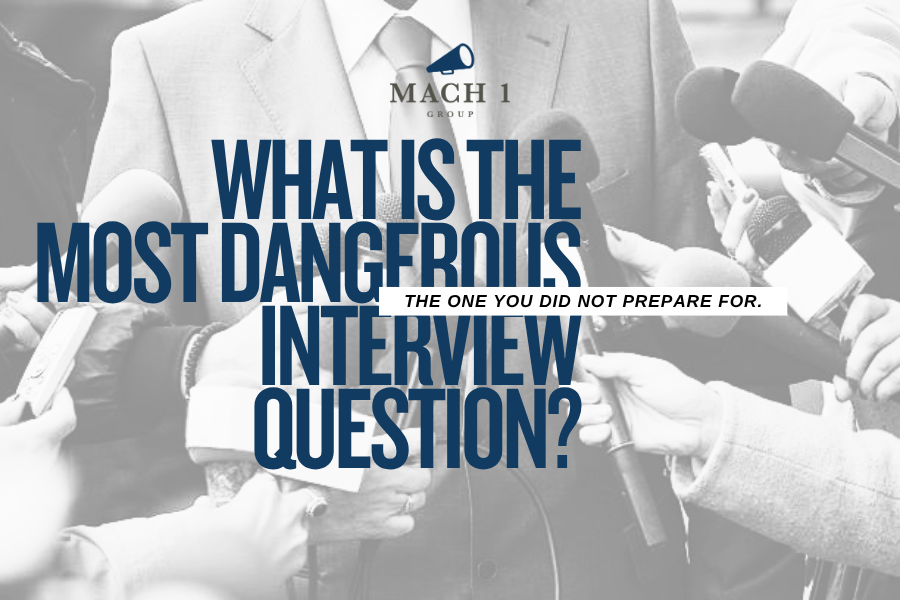
Interviews can veer off course in the blink of an eye. The challenge is rarely a lack of subject matter expertise. As the person being interviewed, you likely know the topic better than anyone. The difficulty comes when a question tests your judgment, presents a false choice or pushes you to say more than you intended. Journalists are trained to spot weak points and ask hard-hitting questions. The strongest spokespeople are ready for the unexpected turns or the “dark and twisty” questions, as we like to call them at Mach 1.
When a Question Becomes Dangerous
A question becomes dangerous when the pressure to answer quickly can lead a spokesperson to accept a false premise, speculate beyond what they know or say something that becomes the focus of the story. These moments test whether a spokesperson can maintain authority and control.
Some challenging questions may appear straightforward. A reporter may present two options when neither accurately reflects the situation, creating a false choice. Compound questions can pose a similar challenge when one part sounds reasonable while another contains a problematic premise.
The key is recognizing the premise before accepting it. Spokespeople can acknowledge the legitimate issue, reject an inaccurate premise and guide the conversation toward what they can credibly address.
Preparation allows you to recognize the premise, determine what you can credibly address and guide the conversation rather than allowing a difficult question to dictate the interview.
The Mistakes That Happen Under Pressure
When people are caught off guard, one of the most common mistakes is trying to answer the question exactly as it was asked rather than taking a moment to determine whether the premise is accurate.
Another is filling silence. A reporter does not need an immediate answer simply because they have stopped speaking. Spokespeople can pause and think. Rushing to fill silence can lead to an answer they never intended to give.
It is also important to remember that we are all human. A spokesperson can acknowledge that they do not have an answer and commit to following up.
Communications Strategy
The most effective media training is not about preparing the perfect answer. It is about knowing how to maintain control of the ship when a question is designed to drown you.
Preparation, trust and clear messaging are central to navigating high-stakes communications. The same principle applies to media interviews. Preparation gives spokespeople the confidence to stay grounded in what they know, recognize what a question is really asking and respond in a way that serves both the audience and the organization.
That preparation should include:
- Practicing the unexpected.
Spokespeople should practice their responses to difficult questions before they encounter them in a live interview. - Identifying the goal.
Before an interview, know what you need your audience to understand and return to that objective when a question pulls the conversation elsewhere. - Listening for the premise.
Watch for false choices, compound questions or assumptions that need to be addressed before answering. - Using silence strategically.
A short pause can be more effective than an immediate response. - Knowing when to say “I don’t know.”
Credibility is strengthened by acknowledging what you do not know rather than speculating.
The Takeaways
You cannot predict every question a reporter will ask. You can, however, prepare for the moment when a question takes you somewhere you did not expect to go.
The goal of media training is not to teach you how to avoid legitimate questions or outmaneuver reporters. It is designed to help you recognize when a reporter may be trying to back you into a corner, spot difficult questions, maintain control of the narrative and respond with confidence and grace when the heat turns up.
At Mach 1, effective media training is built around the reality that spokespeople need more than talking points. They need the experience of navigating difficult questions before they face them in public.